
Table of Contents
Why Is My AC Not Blowing Cold Air? 5 Common Causes & Fixes
When your AC is not blowing cold air, it’s usually because of a dirty air filter, low refrigerant, thermostat issues, dirty condenser coils, or electrical problems. You can fix some of these problems yourself by changing the air filter, checking your thermostat settings, or cleaning the outdoor unit. For more complex issues like refrigerant leaks or electrical problems, you’ll need to call a professional HVAC technician to diagnose and repair your system.
Understanding How AC Systems Work
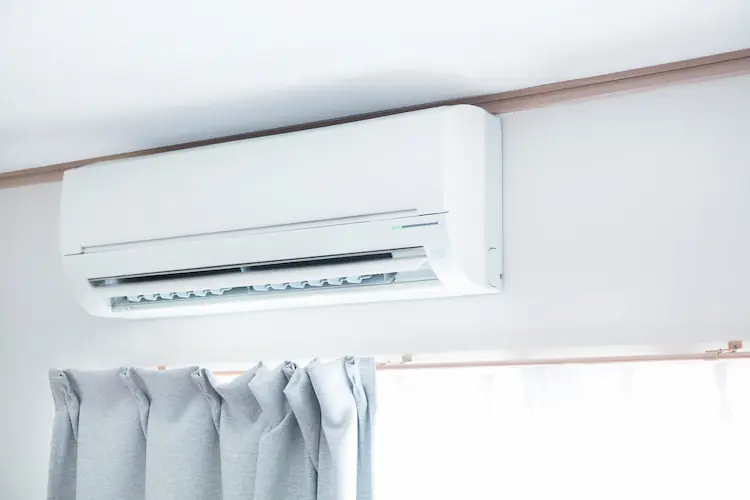
Before we fix your AC not blowing cold air problem, let’s understand how your air conditioner works. Think of your AC like a superhero that fights heat. It doesn’t actually make cold air – it removes heat from your home and sends it outside.
Your AC system has several important parts that work together. The indoor unit (evaporator) pulls heat from your home’s air. The refrigerant (a special cooling liquid) carries this heat to the outdoor unit (condenser). Then the condenser releases the heat outside.
When you set your thermostat to a cool temperature, your AC turns on. The blower fan pushes air over cold coils, and this cooled air flows through your vents. If any part of this process breaks down, you might end up with warm air coming from your vents.
5 Common Causes of AC Not Blowing Cold Air
When your AC is not blowing cold air, these five problems are usually to blame:
1. Dirty or Clogged Air Filters
Dirty air filters are the number one reason ACs stop blowing cold air. When filters get clogged with dust and dirt, they block airflow. This makes it hard for your AC to pull in enough air to cool. It’s like trying to breathe through a thick blanket!
With reduced airflow, your evaporator coil (the part that cools the air) might get too cold and freeze up. Once frozen, it can’t cool air properly. You might notice your AC running but blowing warm air, or the airflow feeling weak.
2. Low Refrigerant Levels
Refrigerant is the special fluid that absorbs heat from your home’s air. If your system is low on refrigerant, it can’t absorb enough heat. This means the air coming from your vents won’t feel cold.
Low refrigerant usually means you have a leak somewhere in your system. Unlike gas in a car, AC systems don’t “use up” refrigerant. The same refrigerant cycles through your system over and over. If levels are low, a professional needs to find and fix the leak, then recharge your system.
3. Thermostat Issues
Sometimes the problem isn’t with your AC at all – it’s with the thermostat! If your thermostat isn’t working right, it might not tell your AC when to turn on. Or it might think your home is cooler than it really is.
Common thermostat problems include:
- Incorrect settings (like being set to “heat” instead of “cool”)
- Dead batteries
- Being placed in direct sunlight or near heat sources
- Wiring problems
- Calibration issues (reading the wrong temperature)
4. Dirty Condenser Coils
Your outdoor AC unit contains condenser coils that release heat outside. When these coils get dirty or covered with debris, they can’t release heat properly. This makes your whole system less efficient.
Dirty condenser coils force your AC to work harder while producing less cooling. Over time, this extra strain can damage your system. You might notice your AC running constantly but not cooling well, or your outdoor unit making strange noises.
5. Electrical Problems
Your AC system relies on electricity to run all its components. Electrical problems can cause various issues, including your AC not blowing cold air.
Common electrical issues include:
- Tripped circuit breakers
- Blown fuses
- Faulty capacitors (parts that help motors start)
- Damaged wiring
- Failed contactors (electrical switches)
Electrical problems can be dangerous and usually require professional help to fix safely.
DIY Troubleshooting and Fixes You Can Try
Before calling a professional, try these simple fixes that might solve your AC not blowing cold air problem:
Check and Replace Air Filters
This is the easiest fix and solves many cooling problems. Find your air filter (usually in the return air duct or in your indoor unit). Take it out and hold it up to a light. If you can’t see light through it, it’s too dirty!
Replace the filter with a new one of the same size. Most homes need filter changes every 1-3 months. If you have pets or allergies, you might need to change it more often.
Verify Thermostat Settings
Check that your thermostat is:
- Set to “cool” mode (not “heat” or “fan”)
- Set to a temperature lower than your current room temperature
- Getting power (replace batteries if needed)
- Not in direct sunlight or near heat sources
Try setting your thermostat 5 degrees lower than normal. If your AC starts cooling properly, your thermostat might need calibration.
Clean Around Your Outdoor Unit
Your outdoor AC unit needs good airflow to work properly. Make sure there’s at least 2 feet of clear space around it. Remove any:
- Leaves, grass clippings, or yard debris
- Overgrown plants or bushes
- Items stored against the unit
You can gently clean the outside of the unit with a garden hose (with the power off). Spray from the inside out to push debris away from the unit. Never use a pressure washer, which can damage the fins.
Check Circuit Breakers
Find your electrical panel and look for any tripped breakers related to your AC system. You might have separate breakers for your indoor and outdoor units. If a breaker is tripped, switch it fully to the “off” position, then back to “on.”
If the breaker trips again immediately, don’t reset it. This indicates a serious electrical problem that needs professional attention.
Inspect Air Vents
Walk through your home and check all air vents. Make sure they’re:
- Open (not closed or blocked)
- Free from dust and debris
- Not covered by furniture, rugs, or curtains
Blocked vents restrict airflow and can cause your system to work poorly. Even in unused rooms, vents should stay open to maintain proper airflow balance.
When to Call a Professional HVAC Technician
While DIY fixes can solve some problems, certain AC issues require professional help. Call an HVAC technician if:
You Suspect Refrigerant Issues
Signs of refrigerant problems include:
- Hissing sounds from your AC
- Ice forming on refrigerant lines or the indoor coil
- AC running constantly but not cooling
- Higher than normal electric bills
Refrigerant is a controlled substance that requires special certification to handle. Never try to add refrigerant yourself – it’s dangerous and illegal without proper licensing.
You Notice Electrical Problems
Call a pro immediately if you notice:
- Burning smells from your AC
- Repeatedly tripping circuit breakers
- Buzzing or clicking sounds from the control panel
- Components that feel hot to the touch
Electrical problems can cause fires or damage expensive AC components. They’re not worth the risk of DIY repairs.
Your AC Makes Unusual Noises
Strange noises usually indicate mechanical problems:
- Grinding or scraping: Could be a problem with the blower motor
- Squealing: Often indicates a belt issue or motor bearing problem
- Banging or clanking: Suggests a loose or broken part
- Clicking that won’t stop: Might be an electrical issue
These sounds usually mean something is broken or about to break. A technician can identify and fix the problem before it causes more damage.
Your AC Is More Than 10 Years Old
Older AC systems are more prone to problems like refrigerant leaks and component failures. If your system is over 10 years old and not cooling properly, a technician can:
- Evaluate whether repair or replacement makes more sense
- Check for efficiency issues that might be costing you money
- Identify potential safety concerns
Sometimes, replacing an older system is more cost-effective than continuing to repair it.
Preventing Future AC Problems
Keep your AC blowing cold air with these preventive maintenance tips:
Regular Filter Changes
Mark your calendar to check your air filter monthly during heavy use seasons. Replace it when it looks dirty, or at least every 3 months. This simple habit prevents many common AC problems.
Schedule Annual Professional Maintenance
Have your AC system professionally serviced every spring before hot weather arrives. A professional will:
- Clean coils and components
- Check refrigerant levels
- Test electrical connections
- Calibrate your thermostat
- Lubricate moving parts
- Identify potential problems before they cause breakdowns
Annual maintenance typically costs $75-$150 but saves money by preventing expensive repairs and extending your system’s life.
Keep Outdoor Units Clean and Clear
Make outdoor unit maintenance part of your regular yard work routine:
- Trim plants at least 2 feet back from all sides
- Remove debris monthly during growing season
- Gently clean the unit’s exterior twice yearly
- Check for level placement after winter (ground shifting can tilt units)
Use a Programmable Thermostat Correctly
A programmable thermostat can help your AC work more efficiently if used properly:
- Don’t set temperature extremes (very cold when home, very warm when away)
- Aim for temperature differences of 5-8 degrees between “home” and “away” settings
- Allow the system to adjust gradually rather than demanding immediate large temperature changes
Sudden large temperature changes force your AC to work harder, which can lead to problems.
Frequently Asked Questions About AC Not Blowing Cold Air
Why is my AC blowing air but not cold?
If your AC is blowing air but it’s not cold, the most common causes are:
- Low refrigerant due to a leak
- Dirty evaporator coils that can’t absorb heat properly
- A frozen evaporator coil (often from airflow problems)
- Compressor issues in the outdoor unit
- Thermostat problems or incorrect settings
Try changing your air filter and checking thermostat settings first. If these don’t help, you likely need professional service.
How much does it cost to fix an AC not blowing cold air?
Repair costs vary based on the problem:
- Filter replacement: $20-$50 (DIY)
- Thermostat replacement: $150-$350
- Refrigerant leak repair and recharge: $200-$1,500
- Capacitor replacement: $150-$400
- Compressor replacement: $1,200-$2,800
Simple problems like dirty filters cost very little to fix, while major component failures can be expensive. Regular maintenance helps avoid costly repairs.
Can I use my AC if it’s not cooling properly?
It’s best to avoid using your AC if it’s not cooling properly. Running a malfunctioning AC can:
- Cause additional damage to components
- Waste electricity (higher bills without cooling benefit)
- Potentially create safety hazards (especially with electrical issues)
If your AC isn’t cooling, turn it off until you can identify and fix the problem.
How long should an AC last?
With proper maintenance, most central AC systems last:
- 10-15 years for standard efficiency models
- 15-20 years for high-efficiency models
Factors that affect lifespan include:
- Maintenance frequency and quality
- Climate (systems in hot regions work harder)
- Usage patterns (how often and how long it runs)
- Initial installation quality
Regular professional maintenance can extend your AC’s life by several years.
Is it normal for my AC to run constantly in very hot weather?
On extremely hot days, it’s normal for your AC to run longer than usual. However, it should still cycle off occasionally. If your AC runs non-stop for days and can’t reach your set temperature, this indicates a problem like:
- An undersized system for your home
- Refrigerant issues
- Dirty coils reducing efficiency
- Ductwork problems
Even during heat waves, a properly functioning AC should be able to maintain your set temperature, though it will run more frequently.
Turn to AC Specialists for Dependable Repair
Don’t suffer through another hot day with an AC that’s not blowing cold air! If you’ve tried the DIY fixes in this guide without success, it’s time to call in the professionals. Our experienced HVAC technicians can quickly diagnose your AC problem and get your system blowing cold air again. Contact Shipton’s Heating and Cooling today to schedule your appointment and restore comfort to your home!